Politics of Filtration
A study of the filtration of Ukrainian citizens at Moscow Sheremetyevo International Airport and the implications of this practice for the Russian occupation of Mariupol


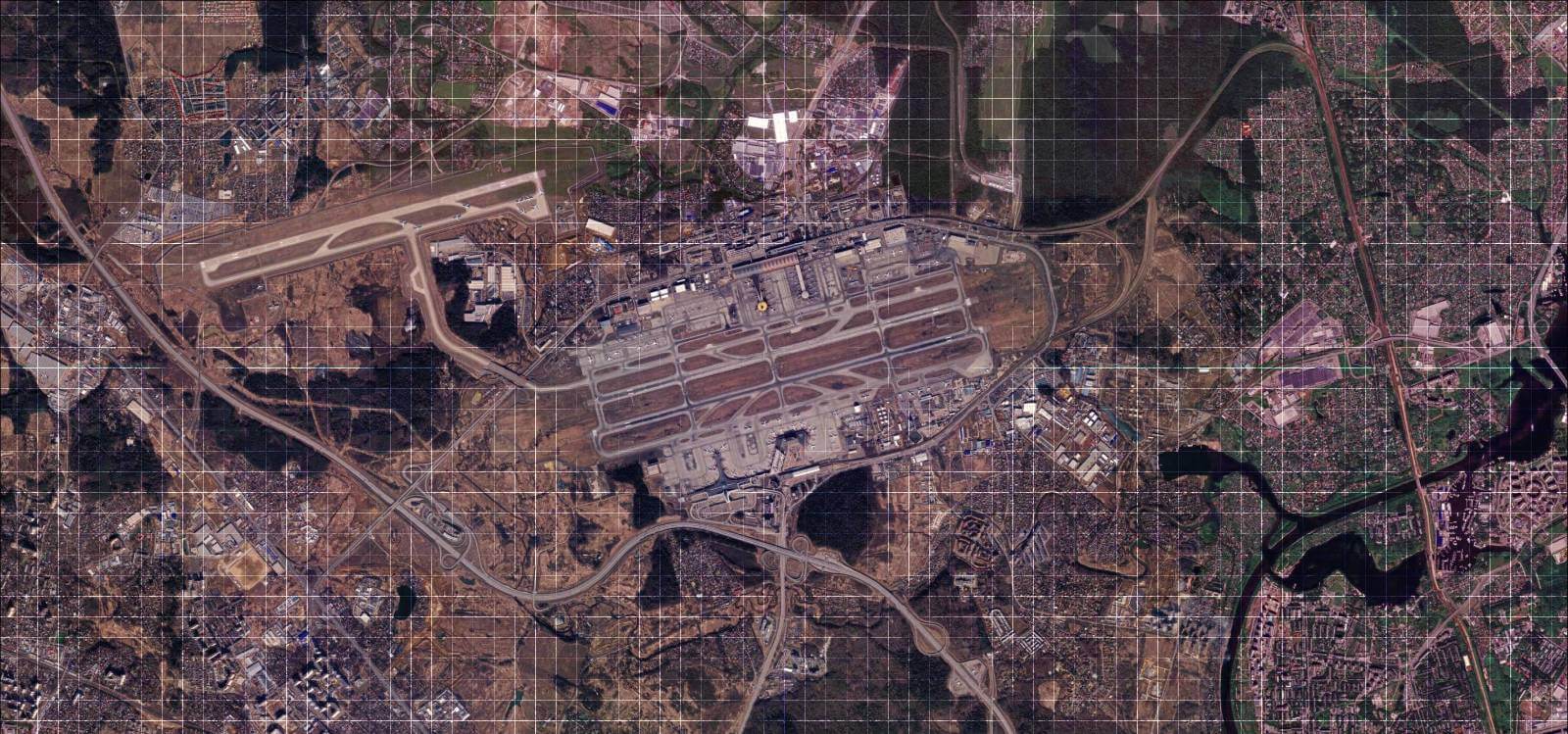
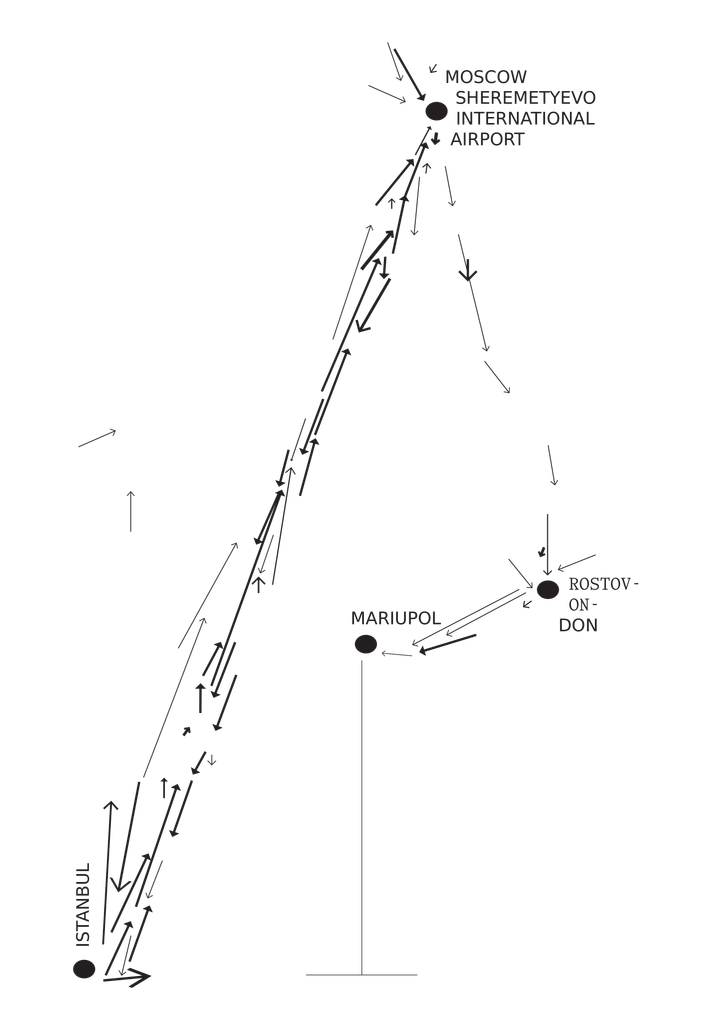
In July 2024, Yuliia1As part of this research, we conducted two interviews with people who had gone through filtration at Sheremetyevo. Their names have been changed and the details of their journeys have been anonymised., a former resident of Mariupol, decided to travel to the Russian-occupied city of Mariupol from France, where she was living at the time. The main reason for her trip was to see her mother, who she had not seen for several years. The last time Yuliia had been in Mariupol was in March 2022; she had managed to leave the besieged city via an evacuation route to Zaporizhzhia. Yuliia knew that in order to reach Russian-occupied Mariupol, she would have to undergo filtration at Moscow Sheremetyevo Airport. She could only get there by plane from a country that still had direct flights to the Russian Federation, or, alternatively, via an EU country bordering Belarus, before arriving in Moscow. Together with her friend Nataliia, Yuliia took a direct flight from Istanbul to Sheremetyevo. After 16 hours at the Moscow airport, where she had to fill in a form about her political views and family ties, hand over her phone for mobile forensics, and undergo an interrogation by officers of the Border Department of the Federal Security Service of the Russian Federation (FSB)2According to witnesses, the airport staff that conducted the interrogations did not identify themselves; however, in the court case files regarding Ukrainians attempting to appeal against entry bans, it is precisely this unit that is listed as the defendant. For the sake of brevity, we will hereafter refer to them as “FSB officers”., she was allowed to enter Russia, and thus, Russian-occupied Mariupol. Yuliia’s friend, however, was denied entry. Nataliia only found this out after a long wait, when the FSB officers took her aside to collect a DNA sample, a procedure that Ukrainian citizens who have been denied entry to the Russian Federation are required to undergo.
Unlike Yuliia, who was able to leave Mariupol via Ukrainian-controlled territories at the beginning of Russia’s full-scale invasion, Yevheniia had already undergone filtration in the spring of 2022. She was only able to leave the city in the direction of the Russian Federation—a process which was documented by human rights organisations reporting on the deportation of Ukrainian citizens to Russian territory. From there, Yevheniia was able to leave for Finland. After a few years, tired of living abroad, she decided to try to return home with her 14-year-old son. Like Yuliia, she also wanted to see her elderly mother, who had remained in the occupied city.
As Yevheniia recalls, she had not prepared for crossing the border at Sheremetyevo, believing that since she is not an active social media user, she would be allowed through. Upon arriving at the airport in August 2024, Yevheniia went through the same procedures as Yuliia and her friend. The FSB officers were unable to unlock her son’s phone, but eventually gained access to its content, which became the main reason the family was denied entry. Yevheniia was informed about this decision only later, during the DNA collection procedure. She then asked the FSB officers if she could still try to cross the border on her own, since her mother was still in Mariupol. She received a reply, “No. You raised a child like this, so you are even more to blame. Of course, you can try again, but it won’t make any difference, even if you try every day.” Eventually, Yevheniia and her son were deported from Sheremetyevo on a return flight to the country they had arrived from. She later submitted a request to one of the Russian law enforcement agencies and learnt that her son had been banned from entering the Russian Federation until 20753We apply the term deportation to a forced expulsion and groundless migrational deportation within the procedure of issuing an entry ban during filtration at Sheremetyevo as a political designation to refer to the forceful nature of such relocation. The establishment of a sole checkpoint for entry to the occupied Ukrainian territories, paired with a 25–50 year entry ban, deprives Ukrainians of the right to return to their places of birth or permanent residence prior to the Russian invasion, cutting them off from important social and material ties that remain under occupation..
***
Describing the genealogy of Western European practices that nation-states consider to be “security measures” at the border—including, for example, biometric identification, body scans at airports, and forensic approaches to personal data,—political geographer Louise Amoore aptly draws on the concept of abstraction. According to Amoore (2009), this practice operates through “abstracted pieces of a person” being “taken apart, drawn into association, and displayed together on the border guard’s screen”. Following this definition, we consider the abstraction of Ukrainian citizens as a process during which the biometric and digital data of a person undergoing filtration are collected in an extremely invasive manner in order to construct a legible identity for Russian border guards. At the same time, understanding the techniques of abstraction applied at the Russian border enables those preparing for filtration to exploit them tactically by creating an alternative identity.
If securitisation practices at the airport—as part of the routine functioning of aeromobility—operate through abstracting the bodies of travellers passing through these spaces, then the filtration of Ukrainians at Sheremetyevo, introduced after 16 October 20234On 6 October 2023, the Government of the Russian Federation issued Decree No. 2723-r, stipulating that restrictions on the entry of Ukrainian citizens into the Russian Federation would come into force at 00:00 on 16 October 2023., has expanded this mechanism of abstraction even further. The process of abstraction does not end with the filtration; it extends through the ways in which the stories of those subjected to it circulate. It unfolds through Russian legal discourse, which constructs Ukrainian citizens seeking to reach their occupied home towns as a “threat to the security of the Russian Federation and public order”5Мещанский районный суд г. Москвы. (2025). Решение в деле о признании решения о неразрешении въезда на территорию Российской Федерации незаконным (№ 2А-183/2025 – УИД 77RS0016-02-2024-029361-16)., or in social media groups where users describe their experiences of undergoing filtration, knowing beforehand that these accounts might be read by the FSB officers themselves, or by these same users adopting the Russian state’s gaze in speculating on the reasons behind someone labelled a “threat” at the Russian border.
This research weaves together stories that deal with the violence inherent in the construction of the occupation border and thus life under occupation and even beyond it. Drawing on the shared experiences—some of them personal and some shared by friends in solidarity, we browsed through chats in Telegram groups dedicated to undergoing filtration, read cases from Russian courts6We analysed publicly available materials from ten court cases filed in 2023–2024 to appeal against decisions made by the FSB border service at Sheremetyevo., where Ukrainian citizens attempt to appeal against decisions denying them entry, and spoke to witnesses who were subjected to this procedure at Sheremetyevo Airport.
Filtration practices may seem to have been limited to the spring of 2022, when accounts emerged in the media revealing the existence of “filtration camps” in Donetsk Oblast—the residents of Mariupol and surrounding areas were forced to pass through such camps during their deportation to the Russian Federation. However, these practices are inextricably linked to occupation. Since early spring 2022, the Russian-established filtration infrastructure has been continuously repurposed while its targets and tools have been constantly changing—from collection of biometric and digital data of Ukrainian citizens and control over their mobility to integration of these procedures into a larger network of measures involving the use of torture, interrogation and unlawful detention in Russian-occupied territories. Filtration will therefore persist in various forms as long as the Russian occupation lasts, but regardless of this, people from the occupied territories will keep trying to reach home. We kept this in mind and conducted this research with a sense of apprehension—while aiming at understanding the politics of filtration and their role in the way Russia has been constructing our future, we do not wish to cause harm to those whose homes ended up being situated closest to the Russian border.
The Genealogy
On 6 October 2023, the Government of the Russian Federation issued a decree under which Ukrainian citizens may enter Russia, and thus the Russian-occupied territories of Ukraine, only via two border crossing points: a land crossing on the border with Latvia, which was promptly closed by the latter to “avoid overcrowding at the border”, and Sheremetyevo Airport, located in the suburbs of Moscow. In practice, this decree meant not only the centralisation of border control by the Russian authorities but also the incorporation of the filtration practices tested in Donetsk Oblast in the spring of 2022 into, it would seem, “routine” border control protocols. Thus, the genealogy of the filtration practices at Sheremetyevo can be traced back to the “filtration camps” established in the Russian-occupied territories of Donetsk Oblast in mid-March 2022, which formed part of the infrastructure for deporting Ukrainian citizens from Mariupol and surrounding areas to the Russian Federation. At the filtration facilities, which were controlled by the Russian security services7This account draws on Borogan, I., Grossfeld, E., Richterova, D., & Soldatov, A. (2023). Back into the cold: Putin’s intelligence and security apparatus a year into the Ukraine war. In Z. Leoni, M. Ryan, & G. Weber (Eds.), War in Ukraine: One year on (pp. 17–19). Centre for Grand Strategy, King’s College London., Ukrainian civilians were subjected to interrogations, device checks, finger- and palmprinting, and forced photographing8The details of this process are provided in the article “Producing the Subject of Deportation. Filtration Processes during the Russia-Ukraine War”, published in September 2022, where Daria Hetmanova, together with Svitlana Matviyenko, describes the logistics of filtration, pointing out its affective dimension.. If an individual was flagged as “suspicious” during the filtration process, this person could then face detention with the risk of physical violence.
In 2022, if Ukrainian citizens passed the filtration, they were allowed to enter the Russian Federation and transported to “temporary accommodation centres” set up across the country, sometimes as far away as Vladivostok. At the same time, the logic behind the forced displacement of Ukrainians resembled the carceral practices9In the article “Disciplined Mobility and Carceral Geography: Prisoner Transport in Russia”, Dominique Moran, Laura Piacentini and Judith Pallot emphasize that many Russian prisoners begin their “etap”—the journey to a penal colony—without any idea of their final destination. of the Russian state, as in some cases people only learnt of their final destination en route to the centre. As historian Franziska Exeler points out, Russian troops began implementing the procedure of filtration of the population as early as during the first and second invasions of Chechnya in the 1990s and early 2000s10In her article “Filtration Camps, Past and Present, and Russia’s War Against Ukraine”, Exeler also refers to the Soviet filtration system established after the Second World War for the repatriation of Soviet civilians. In this system, filtration camps “were also to be designed in such a way that everyone’s wartime history could be checked—and determined whether an individual had (supposedly) been disloyal to Moscow during the war”..
Since moving to Moscow’s Sheremetyevo Airport, the filtration process has ceased to operate in the “grey zone of the law”—namely, in those parts of Donetsk Oblast occupied by Russia since 2014 and those parts where active hostilities took place in 2022. In the spring of 2022, the Russian authorities were still denying the fact that they were conducting filtration. And in the autumn of 2023, they introduced the so-called “temporary entry restriction” that was, in fact, compulsory filtration for Ukrainian citizens entering the Russian Federation and thus the occupied territories. However, this term can now be found in the vocabulary of the Russian courts, which refer to this procedure as “filtration and verification measures” and describe it in great detail. At the same time, the law is increasingly being used as a tool to find grounds for deporting Ukrainian citizens from Russia and, ultimately, from their home cities, which are currently under occupation.
This shift in the discourse on filtration has led to Western media paying less and less attention to these practices. Back in the early 2000s, sociologist William Walters, in his research on histories of expulsion and population transfer, noted the absence of critical analysis of the deportation procedures implemented by Western nation-states. According to Walters (2002), this is because deportation “remains embedded within the contemporary administrative practice of Western states” and so it “strikes us as less remarkable” (ibid.). And although this form of legal expulsion has attracted a great deal of critical attention since the publication of Walters’s text, its association with “routine” bureaucracy still in some ways neutralises the violence behind it. In this sense, the integration of filtration of Ukrainian citizens—along with their subsequent deportation and possible ban on entering the Russian Federation, and thus to the Russian-occupied territories, for up to 50 years—into existing border control protocols has led to a softening of its repressive dimension in public discourse, while also complicating its legal classification as a human rights violation.
The Network of Filtration Elements
The elements that set the violence of filtration procedures in motion are concentrated not only within Sheremetyevo but also far beyond its premises. We have approached them as a network of hidden filtration infrastructure; however, while reconstructing and describing them together, we do not wish to suggest that this account is complete.
Through these components, we aim to comprehend the filtration with the tools available to us outside of research methods, that would allow direct insight into the rooms of the airport’s security services. Some of these elements are particularly important to us, as they emerged as an attempt to deal with the restricted access to occupied Ukrainian cities imposed by Russian policies, yet ultimately became preliminary stages of the filtration process themselves. In our view, this happened due to a specific type of violence mobilized by the filtration procedure. It both hinders the ability to speak about one’s experience of filtration, and any form of engagement with the subject at all.
Given the scale of the digital and biometric data collection from Ukrainian citizens by the Russian security services, enabled by the filtration process in 2022 and the modified one at Moscow’s Sheremetyevo Airport from 2023 onward, the question remains—where and for how long will these data be stored, and in what circumstances will the Russian Federation use them? And while we can only speculate about the intentions behind the creation of such a database, which may still remain undetermined, the process of its accumulation is just as important for understanding the future of the Russian occupation project.


①–② Although the filtration system extends beyond the airport in the form of various additional elements, some of which we have been able to identify within the scope of this project, Sheremetyevo remains its main centre. The airport’s internal infrastructure—including the terminal complex, CCTV system, millimeter wave body scanners, metal detector gates—retains its function within civil aviation in Russia but has at the same time been repurposed to control the movement of residents of Russian-occupied cities.
The witness, Yuliia, described how in the corridor where she was waiting for filtration, crowds of passengers arriving into Sheremetyevo passed by her on their way to passport control. This testimony is important for understanding how routine border control procedures operate alongside those we observe during filtration.
③ The inspection of mobile phones and other electronic devices during filtration is aimed at analysing a person’s digital footprint. All social media comments, deleted files, likes and photographs are scanned. Russian court case materials expose that within the procedure contact lists are cross-referenced against databases held by the FSB. This enables checking for links to the Ukrainian military, police and the Security Service of Ukraine.
Unlike routine checks carried out as part of border control, the filtration process relies almost entirely on analysing a person’s identity through their digital footprint. The need for human interaction, a border guard’s ability to spot “suspicious” behaviour, or to notice differences in facial features compared to the passport photo, or to detect a forged document by touch—still to some extent remain part of the procedure, but they are increasingly superseded by the work of an algorithm that sees deeper and notices more than human senses.
④ While waiting for interrogation by FSB border control officers, Ukrainians must fill out a questionnaire. In addition to being asked about links to Ukrainian security services and “radical groups”, an individual has to provide information on their destination, the names of those travelling with them and the nature of their relationship, the names of relatives living in Russia and the occupied territories, education details and so on. We consider this accumulation of data on people from the occupied territories to be one of the key objectives of the filtration process. It enables the possibility of mapping the connections between people in a centralised way, without additional logistical costs, as well as updating information on those living in the occupied territories, their property, employment and education11This finding forms part of Daria Hetmanova’s doctoral thesis, in which they examine Russia’s filtration infrastructure..
⑤ DNA collection is mainly12We came across isolated, unverifiable accounts from people who stated that they had not provided DNA samples before deportation. carried out on those Ukrainians who are denied entry. After a long wait, having their phone inspected, providing biometric data, i.e. fingerprints and photographs, filling in a questionnaire and being interrogated, the person is not informed of the decision regarding their entry. As a result, no one in the waiting areas knows which of them are allowed through. Instead, the collection of DNA indicates the border guards’ decision. Only in isolated cases do the Russian security officers issue documents on the spot confirming the entry ban. Most people can obtain an explanation of the reasons for the refusal later by submitting a formal request, for instance, to the FSB.
We assume that the collection of DNA samples specifically from deported Ukrainians is driven by an attempt to accumulate more data on those unable to enter Russian territory—whereas once entry is granted, the security services gain access to a significantly wider range of tools within the Russian bureaucratic system to obtain extensive information about the person.13A respondent shared this reflection with Ksenia Rybak during an interview for another of her studies on the use of drones during Russian war against Ukraine. For reasons of confidentiality, we cannot name the author of this statement.
In some cases, after providing a DNA sample, Ukrainians are allowed to leave the airport premises. As Yuliia recounts, this can happen, for instance, as a result of repeated complaints or if children who are undergoing filtration alongside their parents are feeling unwell. In this case, if a family is required to wait until the next morning for a return flight, they may be taken to a hotel for the night, accompanied by security personnel. Despite the lack of data to properly describe this procedure, the very possibility of exiting the airport premises seems to us significant for further reflection on the way the occupation border functions, its breaches, as well as the rationality, sterility and controllability of its construction.
⑥ There are several Telegram groups whose names are derived from the word otkazniki (from the Russian “отказники”—in this context, people who were denied entry). In these groups, people share their experiences of passing or failing the filtration, discuss the nuances of route selection, describe the process of having their devices checked at Sheremetyevo, try to assess chances of crossing the border, and share observations about interrogations and the FSB’s attitude. The conversation in these chats is often heated, and the advice is so contradictory that obtaining entry permission and preparing for filtration can seem impossible. It is hard to describe these groups as mutual-aid communities, as it is never clear whether you can trust the person you are speaking with.
⑦ Filtration has permeated the everyday lives of those trying to return home under occupation, because of the role of a person’s digital footprint in the screening process at Sheremetyevo. The inspection of mobile phones and other devices—as intermediaries in people’s interactions that take place across many areas of life they are not always able to control—has placed the digital dimension at the core of both the filtration itself and the stage before entering the airport’s waiting areas.
Creating a digital identity that appears loyal to the Russian authorities—one that can be easily and unmistakably identified through social media and messaging apps, photo galleries and contact lists on mobile phones, tablets or laptops—is becoming part of the daily routine for those who find the courage to travel to Sheremetyevo. As part of this “preparation”, some advise handing your phone to technical specialists for a “clean-up”, while others claim it is impossible to hide your digital footprint online. Some recommend travelling with a new phone, whereas others insist that unwanted information from old devices can still be found, even on new ones.
Questions posed in the chats can sometimes receive replies along the lines of: “The likelihood of being turned away is very high, and [this— ed.] whole chat is about its dire consequences.” At the same time, these messages are often abruptly followed by: “One thing I can say is that if you’re flying to Sheremetyevo, you need to be prepared. There’s no guarantee you’ll get through, but your chances are significantly higher.” The tactics people devise to cope with the brutality of the policies of occupation, rather than providing support, only add further uncertainty. They both discourage attempts to return home and, at the same time, continually offer hope that someone has managed to do so after all.
In their search for workarounds, people discuss, for example, moving to Belarus for a year before heading to Sheremetyevo. It is as though the elements that constitute the desired loyal identity cannot simply be shaped; they must be truly lived.
⑧ Due to sanctions, there are no direct flights between Russia and the EU, the US, Canada, and the United Kingdom. This has led to the emergence of several private commercial companies that organise “trips” to Sheremetyevo for Ukrainians, though they do not guarantee successful passage through filtration. These companies actively advertise their services in Telegram groups; in addition to logistical support, they also provide pre-trip briefings to help people decide whether to attempt the filtration and how to prepare for it.
⑨ Denial of entry into Russia at Sheremetyevo entails the involvement of airlines in the deportation process. The Russian government decree introducing new rules for the entry of Ukrainians and the filtration process at Sheremetyevo imposed several requirements on state bodies. One of the first of these was to mandate the civil aviation authority Rosaviatsiya to immediately inform airlines about the new border-crossing procedure for Ukrainians.
Airlines on which the deported individuals arrived at Sheremetyevo— with the exception of Belavia—provide them with free return tickets. There is also a great deal of conflicting advice and speculation about this process. For example, in Telegram chats, people are concerned that the Russian airline Aeroflot will stop offering free return tickets in the event of deportation, because of a cyberattack by Ukrainian and Belarusian hackers on its servers in July 2025. Our witness Yuliia also mentioned that, while preparing for the filtration process, she was advised to buy tickets specifically from Aeroflot, which are significantly more expensive—on the basis that Ukrainians will allegedly be granted entry to Russia only if they travel on a Russian airline. Although this did not prove true in her case, the uncertainty left her anxious until the very last moment that her having purchased tickets on another airline might affect her chances of reaching Mariupol.
①⓪ When travelling to Sheremetyevo via Belarus—often using commercial carriers— one must first cross the land border with Belarus. There, officials conduct a mobile phone check and questioning, a process informally known as a preliminary superficial screening. Depending on the results, one may be refused entry to Belarus, which cuts off the route to Sheremetyevo and forces a detour through other countries. However, such a refusal does not necessarily reduce their chance of reaching the occupied territories during the main screening process in Moscow.
The Belarusian and Russian bureaucratic border control systems operate through a constant exchange of data and a clear hierarchy enshrined in a series of intergovernmental agreements.14The two countries have concluded several data exchange agreements. For example, on 12 March 2025, Belarus signed Order No. 107 “On the Information System for the Exchange of Information About Foreign Citizens and Stateless Persons”, establishing an information system to exchange data on border crossings at checkpoints in both Russia and Belarus. Under these circumstances, people refused entry to Belarus while en route to Sheremetyevo can still attempt to pass the screening process by reaching Moscow via an alternative route. However, a deportation decision made at Sheremetyevo does affect a Ukrainian citizen’s right to remain in Belarus.
The Occupation Line
The establishment of the Russian occupation border is closely linked to the intensity of active combat. Its gradual but relentless advance deep into Ukrainian territory, particularly in Donetsk Oblast, cut right through Mariupol, destroying most of the city, and transformed nearly the entire border between Ukraine and Russia into a line of contact and the surrounding area into a kill zone.15A detailed analysis of the formation of the kill zone in the coastal areas of the Mykolaiv, Kherson, Dnipropetrovsk and Zaporizhzhia Oblasts is presented in the Truth Hounds report “Killzone: How Russian Drones Are Devastating the River Dnipro’s Right Bank”. Yet, controlling this border requires not only violence—including the kind that has inflicted the greatest destruction on Donetsk Oblast of all Ukrainian oblasts—but also specific spatial manipulations. By shifting the point of entry, they are subtly reshaping the landscape to draw a new map, where access to the occupied cities is possible only via the Russian capital.
In one of the videos dedicated to border control operations at Sheremetyevo, a Russian journalist describes the airport premises as a “zone of total visual surveillance”, where it is impossible to hide from the “electronic eye of the CCTV cameras”. When we think about the Ukrainian border and Donetsk Oblast, it seems that this vision has literally spread to most of the area surrounding the line of contact, with swarms of FPV drones patrolling the border and rendering it impassable16This reflection forms part of Ksenia Rybak’s ongoing research on drone warfare in Russo-Urkainian war..
Analysing Israel’s occupation strategies in Palestine, architect Eyal Weizman uses the concept of the politics of verticality (2007) to describe a process in which the three-dimensionality of space is harnessed to exert control over the territory.17 This concept overlaps with the notion of vertical occupation introduced by media theorist Svitlana Matviyenko in her reflections on the Russian occupation of Ukraine. See “Vertical Occupation” (2024) in the London Ukrainian Review. In Palestine, this has manifested itself in violent fragmentation of environmental unity, isolating areas that, due to various occupation policies, have lost the ability to function as a single whole, restricting countless aspects of Palestinian life: from access to water to control over mobility (Weizman, 2007). In this context, Weizman briefly references the airport building as a metaphor for and embodiment of the logic of such an occupation strategy (2007). This is evident in the separation of the airport’s internal and external zones, as well as the presence of numerous checkpoints, security corridors, and restricted-access zones which divide the space into elements unable to interact freely (Weizman, 2007).
Following the relocation of border controls for Ukrainians to “Russia’s main air gateway”—with its isolation and remoteness from Ukraine—similar consequences have emerged in filtration policies. Horizontal connections here are severed not only by the kill zone between territories controlled by Ukraine and those occupied by Russia, but also by the sealing off of the occupied territory through the creation of a single point of entry at Sheremetyevo.
To a certain extent, the witness accounts and routes outline the logic behind this dissection of the environment—occurring not merely in Russian airspace just before landing, or even in the long, featureless corridors of the airport. It is visible in the intrusion into the personal maps of people from occupied cities. In the story of the witness Yuliia, for instance, this manifests as a disconnect between her detailed recollections of the route, turns, and detours on the road from Mariupol toward Ukraine-controlled areas during her evacuation at the start of the full-scale invasion—a route now traversed mostly by drones—and her inability to recall any details of the journey after Sheremetyevo, apart from the names of major Russian cities.
Home
Many aspects of Mariupol residents’ life return them to the city despite the occupation, the inevitability of FSB interrogations, the difficulty and expense of traveling home, and the unbearable experiences during the 2022 siege.18The brutality of the Russian siege of the city, the shelling of residential neighbourhoods by the Russian Armed Forces, the deliberate targeting of large civilian shelters and the difficult humanitarian situation resulted that all Mariupol residents with whom we have spoken—both within our various research projects and beyond them—have extremely traumatic memories of this period. For example, a witness named Yevheniia shared that during the siege of Mariupol, she and her neighbours buried the bodies of those who died in the courtyard of the block of flats; she knew them, as they had been hiding with her in the building’s basement. One of these aspects is what brought us to this topic as researchers: housing in occupied Mariupol and the politics of “reconstruction” around it.19In 2024–2025, the Scarcity collective, and Ksenia Rybak as its member, were conducting research into the processes of Mariupol’s “reconstruction” by the occupying authorities “With Bricks, Not Bombs” for the Mariupol Memory Park. Within this research, we became interested in the filtration process at Sheremetyevo Airport and its connection to the displacement of Mariupol residents from the city.
The privatisation processes of the 1990s led to a particular situation with the housing stock in Ukrainian cities: around 93% of it was distributed among the population, which enabled many residents to settle in flats or houses that belonged to their families. After the seizure of Mariupol, the Russian Federation faced the challenge of managing a significant amount of severely damaged or destroyed buildings, where ownership rights still remain with the city’s residents, the majority of whom were deported to the Russian Federation, forced to evacuate, or killed.20Prior to the start of the full-scale invasion, there was a lack of accurate quantitative data on the population of Ukrainian cities. The Ministry of Finance states that the number of people living in Mariupol in January 2022 was over 425,681.22 However, this figure might be significantly underestimated. A joint report by Human Rights Watch and Truth Hounds, published in February 2024, suggested that approximately 400,000 residents had left Mariupol by the time it was fully occupied in mid-May 2022. Within the same research, the authors estimated that over 10,000 people had been buried in the city (though this figure may also include residents of neighbouring villages). Overall, according to the data by The United States Department of State, between 900,000 and 1.6 million Ukrainian citizens were deported from the occupied Ukrainian territories to Russia.
The local residents’ ties to their homes, combined with the scale of the Russian authorities’ intrusion in the built environment of Mariupol through the “reconstruction” of deliberately destroyed buildings, have created a strong connection between housing and filtration. Human rights lawyers and activists suggest in public comments—and, more broadly, in the media—that the filtration at Sheremetyevo airport serves as one of the methods for rejecting potential applicants for compensation for damaged property, whether in the form of a new flat or a fixed payment introduced by the Russian Federation following the occupation. At the same time, to control this process, the Russian authorities passed a law that only those who not only hold Russian citizenship but are also physically present in the occupied territories can apply for compensation. Consequently, in order to return to Mariupol, people would be required to undergo filtration at Sheremetyevo airport. This procedure, by regulating Mariupol residents’ access to the city, is permeating its very environment. As if the filtration process were present in the cement that binds the buildings, rebuilt for someone else, testifying literally to the fact that it is a bureaucratic means of constructing reality.21 In their book Unfree in Palestine: Registration, Documentation and Movement Restriction (2013), anthropologists Adah Kay and Nadia Abu-Zahra analyse the role of passportisation and the documentation of identity in occupation policies of Israel in Palestine. They suggest considering the bureaucratic means used by occupation regimes not as means of representing reality, but as mechanisms for constructing it.
Analysing the different laws passed relating to housing and filtration, we did not observe any direct synchronisation between them. However, the interplay of these legislative acts that emerged after they came into force seem to be particularly significant. We refer to them because they express the rhizomatic nature and semi-controlled multidirectionality of occupation politics—they never target a single objective.
***
Figures that would indicate how many people undergo the filtration process and how many are rejected—in other words, statistical data as an instrument that would help us understand at least the scale of this procedure—are almost impossible to apply while reflecting on it.22We tried to find at least some data that might give an idea of the scale of the deportations. Most of the journalist reports refer to an interview with Yury Kokov, Deputy Secretary of the Security Council of Russia, published in Rossiyskaya Gazeta in June 2025. Without specifying the period to which the figures relate, Kokov claims that “over 24,000 Ukrainian citizens were denied entry to the country due to being involved in terrorist and extremist activities”, while “over 26,000 were denied entry due to suspected connections to Ukrainian security services, nationalist organisations and armed groups”. The tautological nature of the terms used to describe these statistics, as well as the absence of any time frames, suggests that such data is likely to be unreliable.
In the article “The Politics of Distorted Data: How Many War-Displaced Ukrainian Citizens Are in Russia?”, sociologist Lidia Kuzemska (2024) analyses the statistics provided by the Russian side in 2022–2023 regarding the number of forcibly displaced Ukrainian citizens23Kuzemska also points out that the number of categories used by the Russian side to classify forcibly displaced Ukrainians is not politically neutral. She notes that the use of categories such as “refugees”, “evacuees” or “arriving people”, and so on, hides the very reason for the forced displacement of Ukrainians, while emphasising its humanitarian dimension. in Russia, where the figures provided by Russian sources sometimes reached 5.4 million people. After a thorough comparison of data from various sources, Kuzemska concludes that a more realistic figure for the number of forcibly displaced Ukrainians is at most 1 million people. Here, the Russian authorities are using statistics as “yet another war tool” (Kuzemska, 2024).
The quantitative data on filtration available publicly are mainly provided—and thus constructed— by the authorities of the Russian Federation in the interests of politics which we ourselves are attempting to comprehend. This is likely also why they have become part of the filtration infrastructure—through which, and despite which, we reflect on this process. Therefore this study is tied to Mariupol, its residents and their stories. Reflecting on the devastating consequences of filtration politics through focus on the lasting processes of community and urban landscape dissolution is what can resist Russia’s attempt to abstract the lived experiences of the people of Mariupol. Focusing on filtration politics due to the complex and constrained choices made by people from Mariupol and other occupied cities provides a lens through which not only can we attempt to comprehend Russian occupation strategies, but also the spaces forcibly divided by the border and the experiences of the people who maintain a connection with them.
References
Amoore, L. (2009). Taking people apart: Digitised dissection and the body at the border. Environment and Planning D: Society and Space, 27(3), 444–464.
Kuzemska, L. (2024). The politics of distorted data: How many war-displaced Ukrainian citizens are in Russia? In V. Sereda (Ed.), War, migration, memory: Perspectives on Russia’s war against Ukraine (pp. 217–262). Transcript Verlag.
Walters, W. (2002). Deportation, expulsion, and the international police of aliens. Citizenship Studies, 6(3), 265–292.
Weizman, E. (2007). Hollow land: Israel’s architecture of occupation. Verso.
With the support of Rosa Luxemburg Stiftung with funds from the Federal Ministry for Economic Cooperation and Development of Germany / the Federal Foreign Office of Germany. This publication and its parts are made available free of charge provided that proper reference is made to the original publication.
The content of this publication is the sole responsibility of the NGO “Freefilmers” and may not reflect the position of Rosa Luxemburg Stiftung.
Ksenia Rybak’s contribution was supported as part of a broader research project funded by the Deutsche Forschungsgemeinschaft (DFG, German Research Foundation) – Project-ID 262513311 – SFB 1187.
This publication is part of the artistic project “Politics of Filtration” supported within the “KEY WORK: Arts Grants” programme by RIBBON International in partnership with Jam Factory Art Center.
The project team’s views do not necessarily reflect those of the organizations that funded this work.